
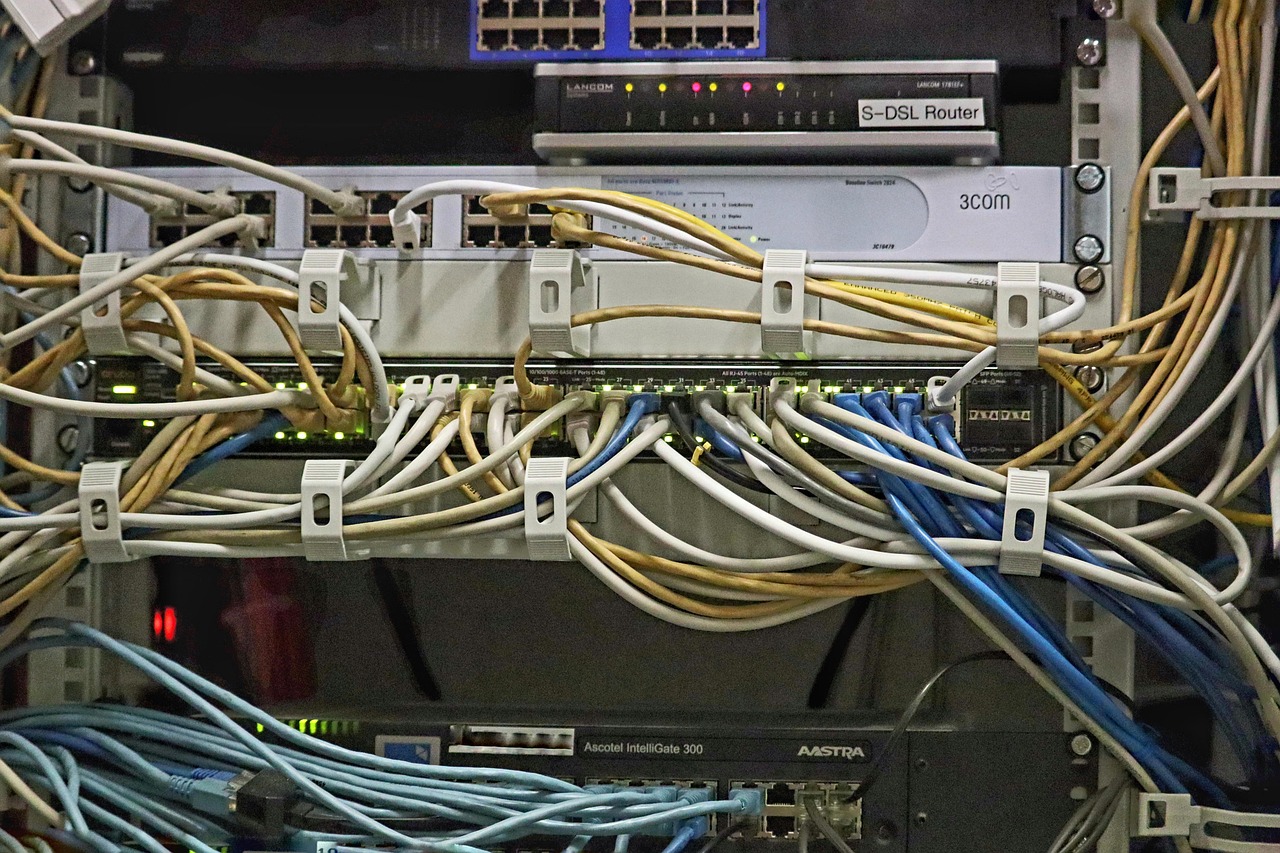
In our increasingly digital world, a powerful yet often overlooked foundation underpins every interaction, every creation, and every connection: hardware. From the smartphone in your pocket to the supercomputer crunching data for scientific breakthroughs, hardware is the tangible engine driving our technological progress. It’s not just about silicon and circuits; it’s about the intricate dance of components that breathe life into software, enabling us to work, play, communicate, and innovate. Understanding the core elements of computer hardware is key to making informed decisions, optimizing performance, and appreciating the incredible engineering behind our digital lives.
The Foundation: Core Internal Components
At the heart of any computing device lies a collection of specialized internal hardware components, each playing a critical role in processing, storing, and managing information. These are the unsung heroes working in concert to deliver the digital experience we take for granted.
CPU: The Brain of the Operation
The Central Processing Unit (CPU) is often referred to as the “brain” of the computer. It’s responsible for executing instructions, performing calculations, and managing the overall flow of data. Major players like Intel and AMD constantly innovate to deliver faster and more efficient processors.
- Key Metrics: Clock speed (GHz), number of cores, cache size.
- Practical Example: A multi-core CPU (e.g., an Intel i7 or AMD Ryzen 7) excels in multitasking, video editing, and complex simulations, allowing you to run several demanding applications simultaneously without significant slowdowns.
- Actionable Takeaway: For gaming or professional content creation, prioritize a CPU with higher core counts and faster clock speeds. For general office tasks, a mid-range CPU is more than sufficient.
RAM: The Short-Term Memory
Random Access Memory (RAM) is your computer’s short-term memory. It temporarily stores data that the CPU needs to access quickly, allowing for rapid retrieval and processing. Unlike long-term storage, RAM clears its contents when the computer is turned off.
- Benefits of More RAM: Faster application loading, smoother multitasking, improved performance in memory-intensive tasks like graphic design and video editing.
- Typical Needs: 8GB for basic use, 16GB for most users and gamers, 32GB+ for professional content creators and engineers.
- Actionable Takeaway: If your computer feels sluggish when many programs are open, adding more RAM is often the most cost-effective upgrade to improve responsiveness.
Storage: Preserving Your Digital World
Storage hardware is where all your operating system, applications, and personal files reside permanently. The two primary types are Solid State Drives (SSDs) and Hard Disk Drives (HDDs).
- SSD (Solid State Drive):
- Technology: Uses flash memory (similar to USB drives) with no moving parts.
- Advantages: Significantly faster boot times, application loading, and file transfers; more durable; consumes less power.
- Practical Example: Upgrading your primary drive from an HDD to an SSD can drastically improve your computer’s overall speed, often making an old system feel new again.
- HDD (Hard Disk Drive):
- Technology: Stores data on spinning platters with read/write heads.
- Advantages: Much lower cost per gigabyte, ideal for mass storage of large files (photos, videos, backups).
- Actionable Takeaway: For optimal performance and cost-effectiveness, many users combine an SSD (for the operating system and frequently used programs) with an HDD (for bulk storage).
Motherboard: The Central Nervous System
The motherboard is the main printed circuit board that connects all the other hardware components, allowing them to communicate with each other. It houses the CPU socket, RAM slots, expansion slots (for graphics cards, etc.), and various ports.
- Role: Acts as the communication backbone, distributing power and data.
- Considerations: Form factor (ATX, Micro-ATX, Mini-ITX), chipset (determines compatibility and features), number of slots and ports.
- Actionable Takeaway: When building a PC, choose a motherboard that supports your chosen CPU and has enough expansion slots and ports for your current and future needs.
GPU: Powering Visuals and Beyond
The Graphics Processing Unit (GPU), also known as a graphics card or video card, is a specialized processor designed to accelerate the creation of images, videos, and 3D graphics. While some CPUs have integrated graphics, dedicated GPUs offer far superior performance.
- Applications: Essential for gaming, video rendering, CAD, and increasingly, AI and machine learning tasks.
- Major Brands: NVIDIA (GeForce series) and AMD (Radeon series).
- Practical Example: A high-end NVIDIA RTX or AMD Radeon RX graphics card can render complex 3D environments in real-time, delivering stunning visuals in the latest video games or speeding up 4K video exports by several factors.
- Actionable Takeaway: Gamers and professional content creators should allocate a significant portion of their budget to a powerful dedicated GPU.
Power Supply (PSU): The Heartbeat
The Power Supply Unit (PSU) converts AC power from the wall outlet into DC power that the computer’s components can use. It’s a critical component for system stability and longevity.
- Key Factor: Wattage (W) – must be sufficient to power all components.
- Efficiency Ratings: 80 PLUS Bronze, Silver, Gold, Platinum (higher is better for energy efficiency).
- Actionable Takeaway: Never skimp on the PSU. A reliable, adequately rated PSU protects your valuable components from power fluctuations and ensures stable operation. Use an online PSU calculator to estimate your system’s power needs.
Cooling Systems: Keeping It Chill
High-performance hardware generates significant heat, which can lead to performance throttling or even component damage if not managed. Cooling systems dissipate this heat.
- Types:
- Air Cooling: Uses heatsinks and fans (common for CPUs, GPUs, and case ventilation).
- Liquid Cooling (AIO or Custom Loop): Uses a liquid coolant circulated through radiators; highly effective for extreme performance.
- Practical Tip: Regularly clean dust filters and internal fans to maintain optimal airflow and prevent overheating, which can drastically reduce the lifespan of your components.
- Actionable Takeaway: Ensure your PC case has good airflow and that your CPU cooler is adequate for your processor, especially if you’re engaging in demanding tasks or overclocking.
Beyond the Box: Essential External Hardware
While internal components do the heavy lifting, external hardware, also known as peripherals, provides the crucial interface between you and your computer. These components allow you to input commands, receive output, and connect to the wider digital world.
Input Devices: Your Interface with the Machine
Input devices allow users to send data and commands to the computer.
- Keyboards:
- Types: Membrane, mechanical (known for tactile feedback and durability), ergonomic.
- Practical Example: A mechanical keyboard can significantly improve typing speed and comfort for writers or programmers due to its distinct key presses and responsiveness.
- Mice:
- Types: Optical, laser (for higher precision), ergonomic, gaming mice (with extra buttons and adjustable DPI).
- Actionable Takeaway: Invest in a comfortable and responsive mouse and keyboard that suits your specific work or gaming style to enhance productivity and reduce strain.
- Other Input Devices: Webcams, microphones, scanners, graphics tablets, joysticks, touchscreens.
Output Devices: Seeing and Hearing Your Work
Output devices display or present processed data from the computer to the user.
- Monitors:
- Key Specs: Resolution (1080p, 1440p, 4K), refresh rate (Hz), response time (ms), panel type (IPS, TN, VA).
- Practical Example: A high-refresh-rate monitor (144Hz+) is crucial for competitive gamers, providing smoother visuals and a more responsive experience. A 4K IPS monitor offers superior color accuracy for graphic designers.
- Speakers/Headphones:
- Essential for audio feedback, multimedia consumption, and communication.
- Actionable Takeaway: Choose a monitor that matches your GPU’s capabilities and your primary use case (gaming, productivity, creative work). Good quality headphones or speakers can greatly enhance your multimedia experience.
- Other Output Devices: Printers, projectors.
Networking Hardware: Connecting the World
Networking hardware facilitates communication between computers and other devices, both locally and globally.
- Modems: Convert signals from your Internet Service Provider (ISP) into a format your router can understand.
- Routers: Direct network traffic, allowing multiple devices to share an internet connection, often wirelessly (Wi-Fi).
- Network Interface Cards (NICs): Internal components that allow a computer to connect to a network via an Ethernet cable or Wi-Fi.
- Practical Tip: For critical devices like gaming PCs or streaming setups, using an Ethernet cable can provide a more stable and faster connection than Wi-Fi, minimizing latency.
- Actionable Takeaway: Ensure your router is up-to-date and appropriately configured for your internet speed to get the most out of your broadband connection.
Peripherals for Productivity & Creativity
Many other external hardware components enhance specific tasks.
- Printers & Scanners: For physical document creation and digitization.
- External Drives: Portable storage for backups or expanding capacity (e.g., USB flash drives, external HDDs/SSDs).
- Webcams & Microphones: Essential for video conferencing, content creation, and online communication.
- Actionable Takeaway: Evaluate your workflow and invest in peripherals that directly address bottlenecks or enhance your specific creative or professional activities.
The Evolution of Hardware: Trends and Innovations
The hardware landscape is in constant flux, driven by relentless innovation. From shrinking form factors to specialized processing power, here’s a look at key trends shaping the future of computing.
Miniaturization and Portability
Hardware components continue to shrink in size while increasing in power, leading to incredibly capable portable devices.
- Laptops & Ultrabooks: Offering desktop-level performance in slim, lightweight designs.
- Smartphones & Tablets: Powerful mobile devices that integrate multiple functionalities.
- Wearables: Smartwatches, fitness trackers, and AR/VR headsets bringing computing closer to the user.
- Impact: Increased mobility, ubiquitous computing, and new interaction paradigms.
- Actionable Takeaway: Consider the portability requirements of your lifestyle when choosing devices. A powerful laptop might be more versatile than a desktop if you frequently work on the go.
Performance Gains: Faster, Stronger, More Efficient
Moore’s Law, though debated in its traditional form, still influences the drive for greater processing power and efficiency.
- Multi-core Processors: Standardizing parallel processing for complex tasks.
- GPU Acceleration: Leveraging GPUs for general-purpose computing (GPGPU) beyond graphics, significantly speeding up tasks in scientific computing, AI, and data analysis.
- Energy Efficiency: Focus on lower power consumption in components like CPUs, GPUs, and SSDs, crucial for mobile devices and data centers alike.
- Practical Example: Modern CPUs and GPUs are designed with complex power management features that dynamically adjust clock speeds and voltage to conserve energy when full performance isn’t needed, extending battery life in laptops.
Specialized Hardware: AI, Gaming, and Data Centers
As computing needs diversify, so does hardware specialization.
- AI Accelerators: GPUs, TPUs (Tensor Processing Units), and custom AI chips designed for machine learning workloads are powering advancements in AI.
- Gaming Hardware: High-refresh-rate monitors, advanced graphics cards, and specialized controllers for immersive gaming experiences.
- Data Center Hardware: Rack-mounted servers, high-density storage arrays, and specialized networking gear designed for scale, reliability, and continuous operation.
- Statistic: The global AI hardware market is projected to reach over $100 billion by 2027, highlighting the growing demand for specialized AI computing.
- Actionable Takeaway: If you have specific, demanding use cases like AI development or competitive gaming, research hardware specifically optimized for those tasks rather than relying on general-purpose solutions.
Sustainability in Hardware Design
There’s a growing emphasis on environmentally friendly hardware, from manufacturing processes to power consumption and recyclability.
- Eco-Friendly Materials: Using recycled plastics and reducing hazardous substances.
- Energy-Efficient Components: Lower power consumption reduces electricity bills and carbon footprint.
- Modularity and Repairability: Designing hardware that is easier to repair and upgrade, extending product lifespans and reducing e-waste.
- Actionable Takeaway: When purchasing new hardware, look for products with recognized energy efficiency ratings (e.g., ENERGY STAR, 80 PLUS for PSUs) and brands committed to sustainable practices.
Choosing and Upgrading Hardware: A Practical Guide
Making smart hardware choices can significantly impact your productivity, enjoyment, and budget. Here’s how to navigate the options.
Assessing Your Needs: What’s Your Usage?
Before buying or upgrading, clearly define how you’ll use your computer.
- Basic Use (Browsing, Email, Office): Focus on affordability, sufficient RAM (8-16GB), and an SSD for responsiveness.
- Gaming: Prioritize a powerful GPU, a high-refresh-rate monitor, a strong CPU, and adequate RAM (16-32GB).
- Content Creation (Video Editing, 3D Rendering): Max out RAM (32GB+), invest in a high-core-count CPU, a powerful GPU, and fast, ample storage (SSD).
- Actionable Takeaway: Be honest about your primary use case. Over-specifying for simple tasks wastes money, while under-specifying for demanding work leads to frustration.
Budgeting for Hardware: Value vs. Performance
Hardware costs vary widely. It’s about finding the sweet spot for your budget and needs.
- Mid-Range Sweet Spot: Often offers the best “bang for your buck,” providing excellent performance without the premium price tag of top-tier components.
- Prioritize Components: Allocate your budget primarily to the components that directly impact your most demanding tasks (e.g., GPU for gaming, CPU/RAM for video editing).
- Practical Tip: Look for sales, bundles, and reputable refurbished options to save money without sacrificing too much performance.
- Actionable Takeaway: Create a budget and stick to it, prioritizing components that align with your core computing needs. Don’t be afraid to research benchmarks and reviews to find the best value.
The DIY Advantage vs. Pre-built Systems
Deciding between assembling your own PC or buying a ready-made one has pros and cons.
- DIY (Do-It-Yourself):
- Pros: Complete control over component selection, often better value, learning experience.
- Cons: Requires technical knowledge, time-consuming, no single point of warranty support.
- Pre-built Systems:
- Pros: Convenience, warranty and support from a single vendor, often includes OS pre-installed.
- Cons: Less control over components, potential for proprietary parts, often higher cost for equivalent specs.
- Actionable Takeaway: If you enjoy tinkering and want maximum customization and value, DIY is rewarding. If convenience and guaranteed support are paramount, a pre-built system is a better choice.
When to Upgrade vs. Replace
Understanding when to upgrade a component versus replacing the entire system can save money and extend the life of your tech.
- Upgrade When:
- Performance bottlenecks are specific (e.g., sluggishness due to low RAM, slow loading times due to HDD, poor gaming framerates due to old GPU).
- Key components like RAM, SSD, or GPU are easily replaceable and compatible with your existing motherboard/CPU.
- Replace When:
- Multiple core components (CPU, motherboard, RAM) are outdated and incompatible with modern standards.
- The cost of upgrading significant parts approaches the cost of a new, more efficient system.
- Your current system struggles with basic modern tasks despite minor upgrades.
- Practical Example: A 5-year-old PC with a decent CPU but an old HDD and 8GB RAM would benefit greatly from an SSD and 16GB RAM upgrade. A 10-year-old PC might be better off replaced, as its CPU and motherboard architecture are likely too old to support modern upgrades efficiently.
- Actionable Takeaway: Before making a decision, benchmark your current system and research the compatibility and cost of potential upgrades. Often, a strategic upgrade can breathe new life into an aging machine.
Maintaining Your Hardware for Longevity and Performance
Proper hardware maintenance is crucial for extending the lifespan of your devices, ensuring optimal performance, and preventing costly repairs. A little care goes a long way.
Physical Maintenance: Dusting and Cleaning
Dust is the enemy of electronics. It acts as an insulator, trapping heat and hindering cooling.
- Regular Cleaning: Use compressed air to blow dust out of case fans, CPU heatsinks, and GPU coolers every 3-6 months.
- Surface Cleaning: Use microfiber cloths and appropriate cleaning solutions for screens, keyboards, and mice to keep them hygienic and functional.
- Cable Management: Organize internal and external cables to improve airflow and prevent accidental disconnections.
- Actionable Takeaway: Schedule regular internal cleaning for your desktop PC or laptop. A clean machine runs cooler, quieter, and more efficiently.
Software Maintenance: Drivers and Firmware Updates
While not physical, software maintenance directly impacts how your hardware performs.
- Driver Updates: Keep your GPU, chipset, and peripheral drivers updated. Manufacturers frequently release new drivers that improve performance, add features, or fix bugs.
- Firmware Updates: Occasionally, components like SSDs, motherboards (BIOS), and network cards receive firmware updates that can enhance stability or performance.
- Practical Tip: Use official manufacturer websites or dedicated software (like NVIDIA GeForce Experience or AMD Adrenalin) to manage driver updates.
- Actionable Takeaway: Regularly check for and install hardware driver updates. This can unlock new features, resolve compatibility issues, and often improve performance, especially for graphics cards.
Environmental Factors: Temperature and Humidity
The environment your hardware operates in significantly affects its health.
- Temperature Control: Avoid placing computers in direct sunlight or near heat sources. Ensure adequate ventilation around laptops and desktops.
- Humidity Levels: Extremely high humidity can lead to condensation and corrosion, while very low humidity can increase static electricity risks. Aim for moderate levels.
- Surge Protection: Always use a surge protector for all your electronic devices to guard against power spikes.
- Actionable Takeaway: Operate your computer in a cool, dry, and well-ventilated space. Invest in a quality surge protector to safeguard your hardware from electrical anomalies.
Recognizing Warning Signs
Being aware of common hardware warning signs can help you address issues before they escalate.
- Unusual Noises: Grinding sounds from HDDs, loud fan noises, or clicking sounds can indicate impending failure.
- Sudden Performance Drops: Slowdowns, frequent crashes, or freezing might point to overheating or component failure.
- Visual Artifacts: Glitches, lines, or distorted colors on your screen often signal a GPU issue.
- Boot Failures: Difficulty starting up or “Blue Screens of Death” (BSODs) can indicate serious hardware problems (RAM, CPU, storage).
- Actionable Takeaway: Pay attention to your computer’s behavior. If you notice persistent warning signs, back up your data immediately and investigate the issue using diagnostic tools or professional help.
Conclusion
From the microscopic transistors on a CPU to the vast networks connected by routers, hardware is the unsung hero of our digital age. It’s the tangible infrastructure that gives life to our software and enables the countless innovations we experience daily. Understanding the components, their functions, and how to maintain them empowers you not just as a user, but as an informed participant in the technology landscape. As hardware continues its relentless march towards greater speed, efficiency, and specialization, staying informed about these advancements will ensure you can always make the best choices to power your productivity, creativity, and connection to the world.